
The AI triage platform healthcare organizations run on.
Pulsa Health gives HMOs, employers, insurers, and clinics an AI-powered triage and routing layer, deployed to your members and patients as a guided front door to care — cutting avoidable claims, wait times, and misdirected visits.
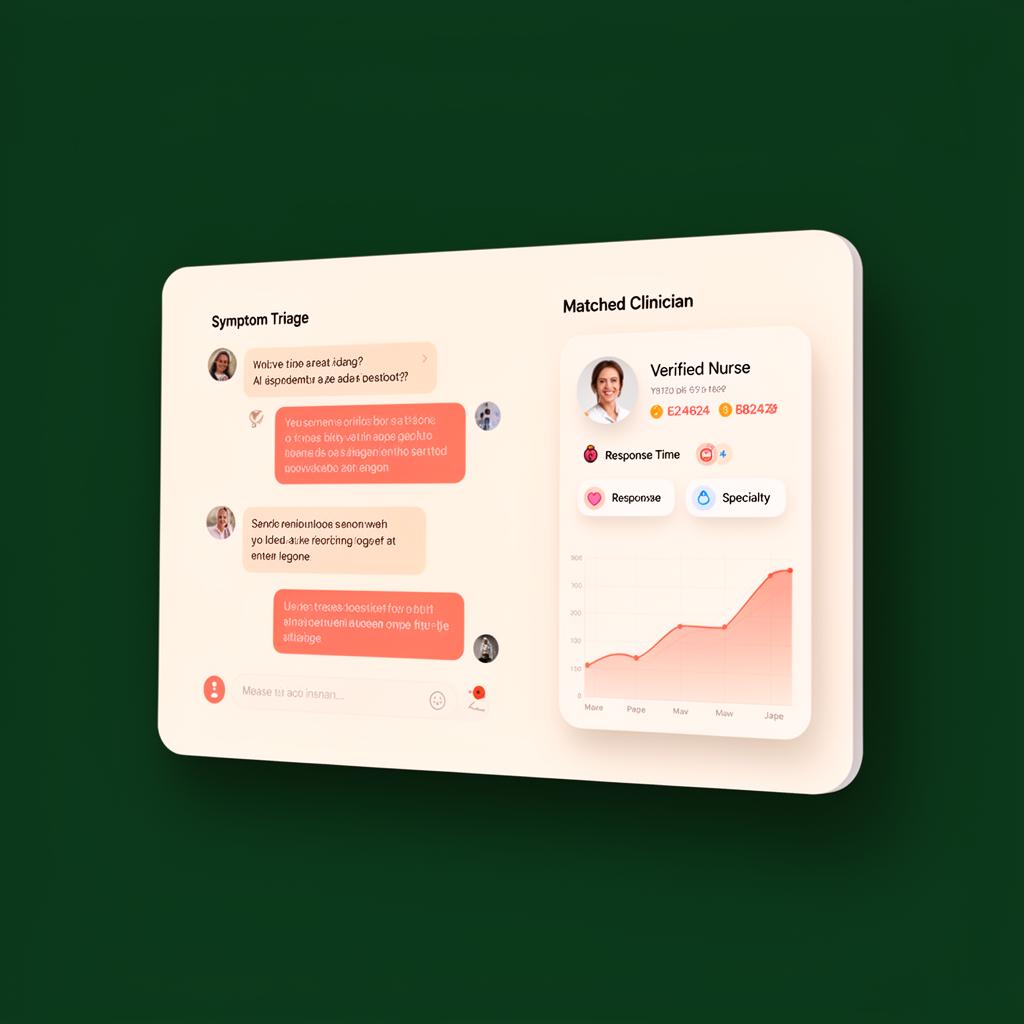
For clinics, HMOs & employers
Give every member a guided front door to care — without adding headcount.
Pulsa plugs into your existing clinic, HMO, or employer health plan as an AI triage and routing layer — pre-screening members before they reach a clinician, flagging risk early, and feeding structured data back into your claims and care workflows.
Fewer avoidable claims
Earlier, accurate triage keeps low-acuity cases out of the ER and routes urgent cases faster — reducing avoidable emergency claims for insurers and employers.
Claims & triage workflow integration
Structured triage signal feeds directly into pre-authorization and claims workflows, giving HMOs and insurers a data layer they can act on — not just a chat transcript.
Member & patient analytics
A dashboard view of utilization, risk trends, and outcomes across your member or patient population, not just individual conversations.
Branded member access
Deploy Pulsa's triage experience as part of your own clinic, HMO, or employer benefit — members and patients experience it as your front door to care.
Clinic capacity relief
Pre-triaged context for every consultation means less time on intake and more time on care — better utilization of scarce clinician hours.
Flexible integration
API and dashboard access designed to sit alongside your existing systems and EMR — no rip-and-replace required.
The problem
Millions of health seekers don't know where to go, who to trust, or when it's urgent.
The first 30 minutes of a symptom decide the cost, the outcome, and sometimes the life. Today that window is wasted on Google searches, WhatsApp voice notes, and crowded waiting rooms.
Africans without reliable primary care access
Average wait for non-emergency consultation
Lost annually to misdirected health spending in Nigeria alone
The member experience
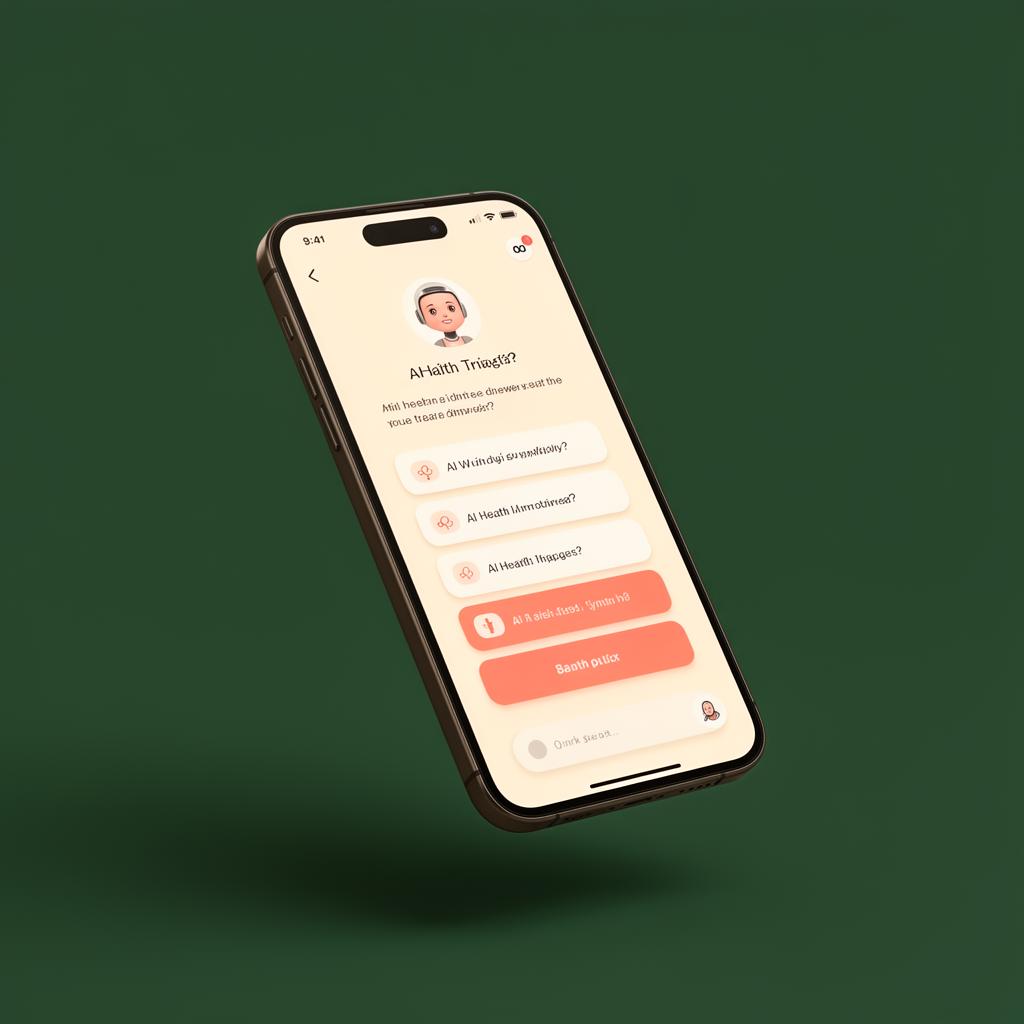
One conversation. The right clinician. Under five minutes.
This is what your members and patients see once Pulsa is live inside your clinic, HMO, or employer plan: an AI assistant that asks the questions a triage nurse would, weighs their answers against millions of clinical patterns, then routes them to a verified human practitioner with the specialty, language, and availability that fits.
- ✓Conversational symptom intake in English, Pidgin, Yoruba, Hausa, Igbo, Swahili
- ✓Risk-tier scoring (self-care, primary, urgent, emergency) in under 60 seconds
- ✓Verified clinician network with response time and license guarantees
- ✓Encrypted health record that travels with you between providers
AI technology
AI isn't a feature here. It's the entire care pathway.
Four models work in concert — symptom understanding, risk stratification, clinician matching, and outcome learning — to deliver triage decisions that a board-certified doctor reviews before any user-facing action.
Symptom understanding
Fine-tuned multilingual LLM trained on de-identified consultation transcripts and WHO clinical guidelines.
Risk stratification
Gradient-boosted ensemble scores severity across 14 axes — including red-flag symptoms most chatbots miss.
Clinician matching
Vector-search over practitioner embeddings (specialty, language, availability, patient outcomes) returns a ranked shortlist.
Continuous learning
Every confirmed diagnosis closes the loop — models retrain weekly on outcome data with full audit trails.
Product
What you get on day one.
24/7 AI triage
Available any hour, any device, any language.
Verified clinician network
Licenses re-checked monthly. Patient ratings public.
Risk alerts
Real-time push when symptoms cross emergency thresholds.
Portable health record
Your history follows you, encrypted and consented.
Family circles
Triage for kids, parents, and dependents from one account.
Provider dashboard
Pre-triaged context for clinicians — no wasted appointment minutes.
How it works
Four steps. Five minutes.
Describe what you feel
Type or speak symptoms in your language. The AI asks follow-ups like a triage nurse.
Get a risk tier
Self-care, primary, urgent, or emergency — with a plain-language explanation.
Match a clinician
Verified nurses and doctors ranked by fit, response time, and outcomes.
Continue safely
Chat, call, or book in-person. Your record stays with you across visits.
Technology & infrastructure
Built on infrastructure clinicians can trust.
Secure, scalable healthcare backbone
Backend APIs run on AWS Fargate behind CloudFront. Patient records live in encrypted RDS Postgres with field-level KMS. Amazon Bedrock powers LLM inference; S3 stores de-identified training data; CloudWatch and GuardDuty handle observability and intrusion detection.
- • Bedrock — managed LLM inference
- • RDS + KMS — encrypted patient data
- • Lambda + ECS — async clinical workflows
- • CloudFront + WAF — global edge delivery
- • CloudWatch — full audit logging
Real-time inference at the edge
Triage decisions need to feel instant. We use NVIDIA Triton Inference Server on GPU instances for low-latency symptom-model serving, TensorRT for compressed on-device inference, and the MONAI framework for imaging features on our roadmap.
- • Triton — multi-model GPU serving
- • TensorRT — sub-100ms inference
- • NeMo — multilingual speech for voice triage
- • MONAI — clinical imaging (roadmap)
- • NIM — portable, secure model deployment
Why now
Africa's digital health window is open — and it won't stay that way.
Smartphone penetration crossed 50% in our launch markets in 2024. Health insurance schemes are digitizing claims. Generative AI is finally fluent in our languages. The gap between “I have a symptom” and “I see the right clinician” is now a software problem — and the team that closes it first defines the category.
Business model
Where we're starting.
Revenue model
Enterprise subscriptions with HMOs, employers, and insurers — per-member-per-month licensing plus claims-integration fees. Per-consultation revenue share with clinicians. Member and patient access is bundled through these organizational contracts.
Target customers
HMOs, insurers, and employers (via SMEs offering staff health benefits) seeking to cut avoidable claims — plus the clinics and urban health seekers who access Pulsa through them.
Launch markets
Nigeria (Lagos, Abuja, Port Harcourt) at launch. Ghana, Kenya, Rwanda, South Africa in year two.
Traction
Early signal.
Waitlist signups in 6 weeks
Pilot clinics in Lagos & Abuja
Letters of intent from HMOs
Live in private beta
“Pulsa caught a hypertensive crisis my mum dismissed as a headache. The clinician was on the line in under three minutes. That alone justifies the entire product.”
Roadmap
What's next.
Team
Clinicians and engineers, building together.

Agu Kelechi
Entrepreneur and health-tech innovator building Africa's AI triage layer.
agu@pulsahealth.site
Get started
Ready to see Pulsa in action?
Book a 30-minute demo with a founder. We'll walk through a live triage session tailored to your organization — clinic, HMO, employer, or insurer.
Prefer email? hello@pulsahealth.site